Home

Galleries

Movie Summaries

Radio Shows

News

Links

Email

Dr. Macro's
High
Quality
Movie Scans

Privacy Statement Visitor Agreement
 

Myrna Loy


THE THIN MAN

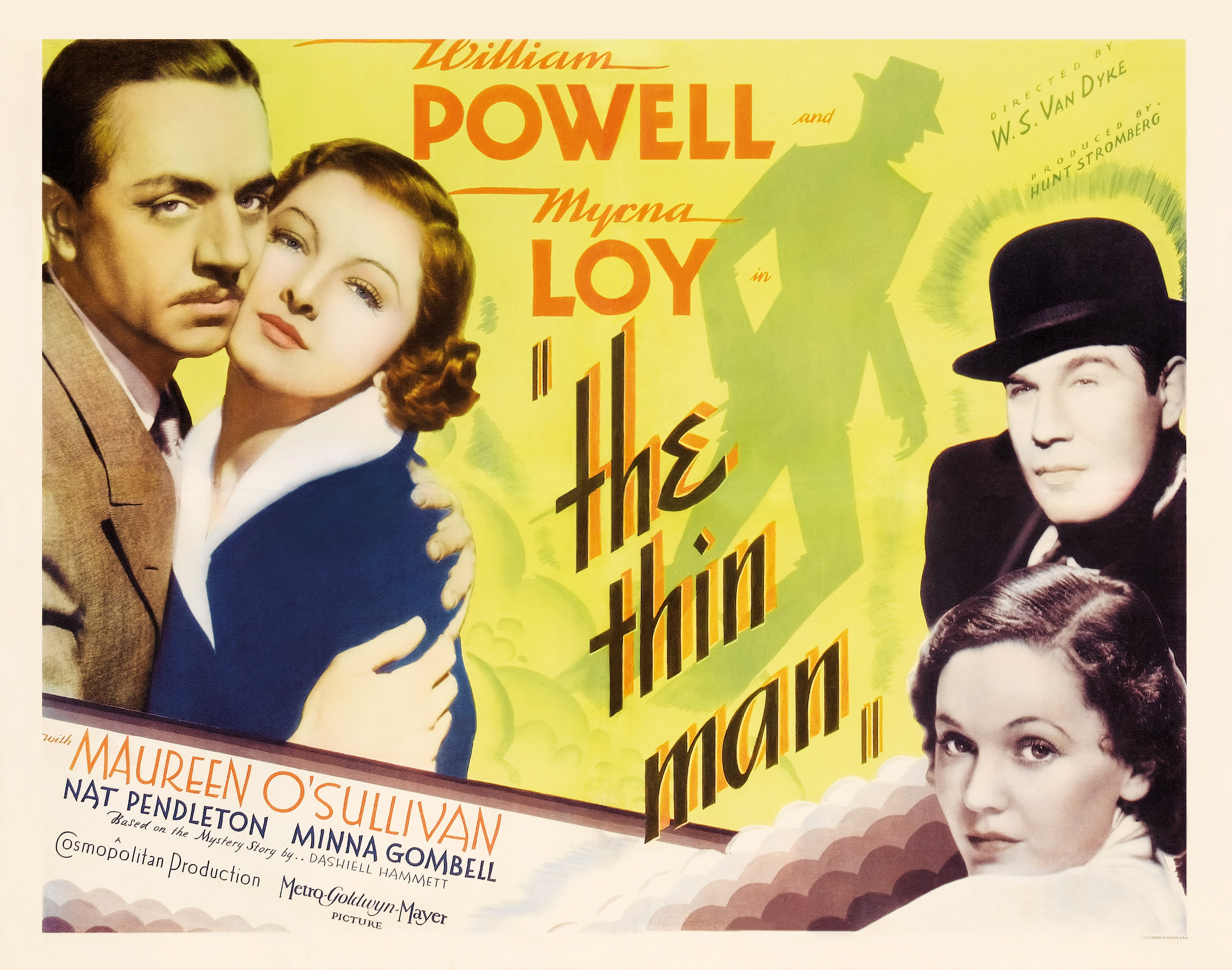
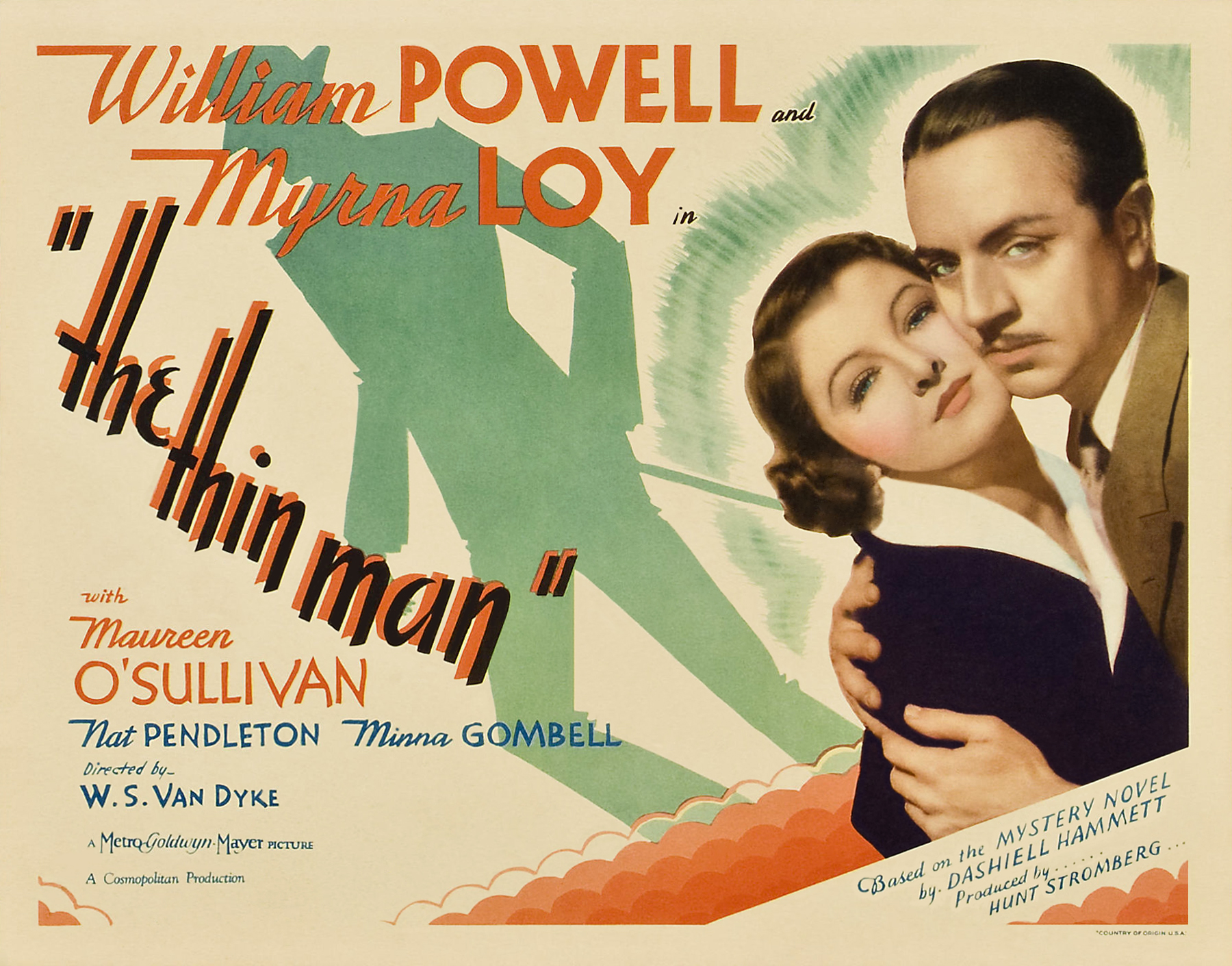
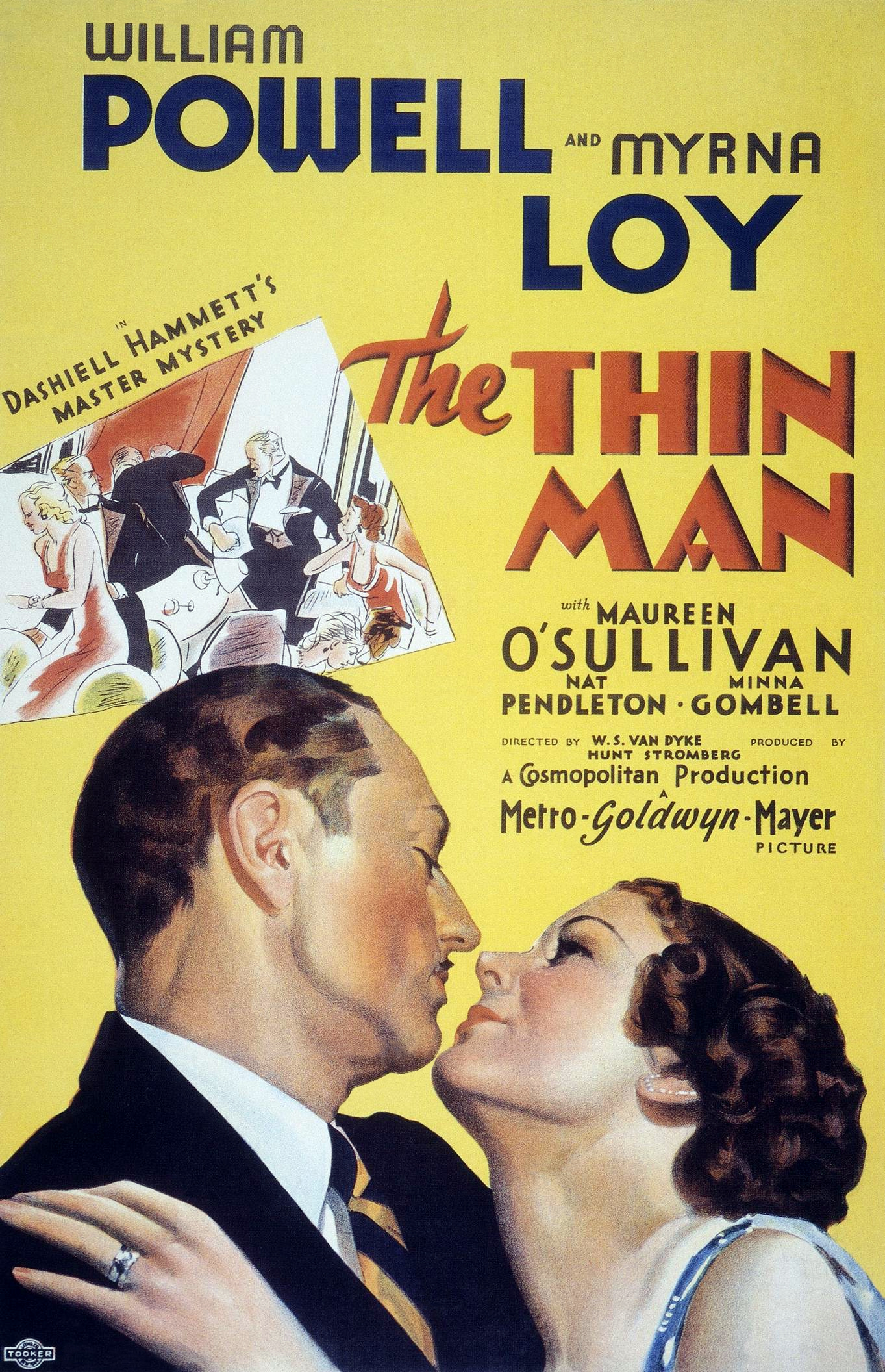
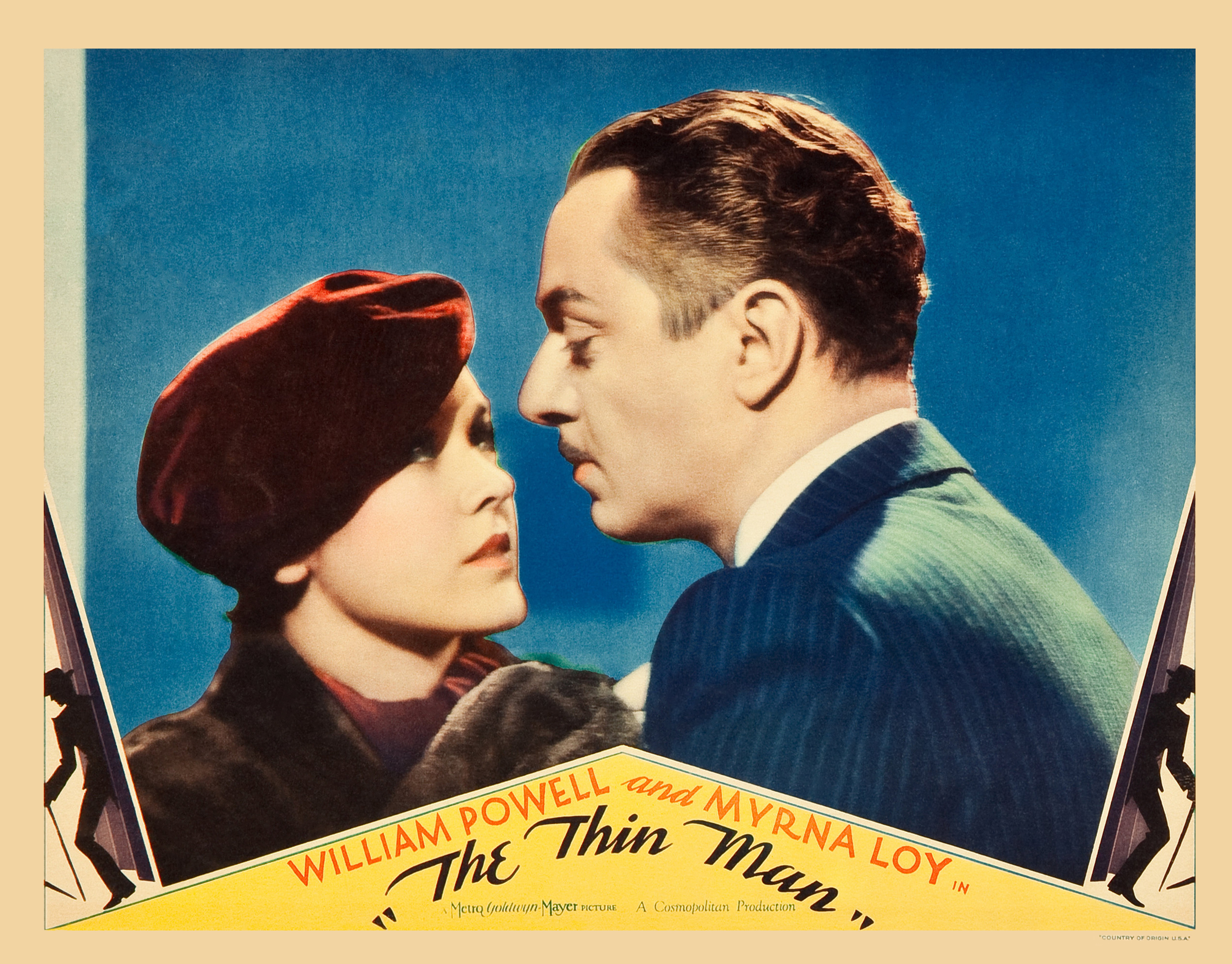
MGM, 1934.  Directed by W.S. Van Dyke.  Camera:  James Wong Howe.  With William Powell, Myrna Loy, Maureen O'Sullivan, Nat Pendleton, Minna Gombel, Porter Hall, Henry Wadsworth, William Henry, Harold Huber, Cesar Romero, Natalie Moorhead, Edward Brophy, Edward Ellis, Cyril Thornton, Ruth Channing, Gertrude Short, Clay Clement, Robert E. Homans, Raymond Brown, Douglas Walton, Sherry Hall, Polly Bailey, Dixie Laughton, Arthur Belasco, Garry Owen, Edward Hearn, Fred Malatesta, Rolfe Sedan, Leo White, Walter Long, Kenneth Gibson, Tui Lorraine, Bert Roach, Huey White, Ben Taggert, Charles Williams, Phil Tead, Thomas Jackson, Nick Copeland, Creighton Hale, Dink Templeton, John Larkin.


Click for larger image


Soon after Dorothy Wynant announces to her inventor father that she plans to marry, he goes on a mysterious business trip, promising to return in time for Dorothy's wedding.  As the day approaches and Wynant fails to return, Dorothy worries, while her mother, Mimi, is frantic that her ex-husband is unavailable to give her and her new husband, Chris Jorgenson, more money.

When Mimi goes to see Julia Wolf, Wynant's mistress, to ask for money, she finds her dead body clutching Wynant's watch chain.  Meanwhile, sophisticated former detective Nick Charles and his wealthy wife Nora have come to New York for the Christmas holidays and become enmeshed in the case, despite Nick's protests that he is no longer a detective.  Nora enthusiastically encourages Nick, and one evening he and Asta, their terrier, discover the skeletal remains of a body in Wynant's laboratory.  The police suspect that Wynant has committed another murder, but Nick realizes that the body must be Wynant's because of a trace of shrapnel found in the leg.

Nick and Nora give a dinner party, to which they invite all of the suspects as guests.  There it is revealed that Mimi had been aiding MacCaulay, Wynant's lawyer, in exchange for cash.  When Nick exposes Chris as a bigamist, thus making Mimi realize that she will now be free to inherit Wynant's money, she incriminates MacCaulay, who had been embezzling from Wynant with Julia's compliance.  Finally, Nick and Nora and Dorothy and her new husband Tommy are on a train, happily bound for California.

Notes
The film is Based on the novel The Thin Man, by Dashiell Hammett (New York, 1934).  Dashiell Hammett's novel first appeared in Redbook in Dec 1933.

Some early trade reviews list the running time variously at 80 minutes and 95 minutes.  According to information in the file on the film in the MPAA/PCA Collection at the AMPAS Library, MGM was advised that some dialogue such as William Powell's line "He didn't come anywhere near my Tabloids," and Myrna Loy's line "What's that man doing in my drawers?" were "censorable."  The picture was approved for exhibition in 1934 and was granted a PCA certificate in August 1935.  After the film's release, some territories did censor some lines of dialogue, and at least one theater owner from the South wrote to the PCA to complain of excessive drinking in the picture which his patrons found offensive.


Click for larger image


Although the "Thin Man" of the title was the character Clyde Wynant, fans of the picture and the subsequent series began to refer to the Nick Charles character as "The Thin Man," and all subsequent films included "The Thin Man" in their titles.  The film was one of the top ten money-makers of 1934 and one of the biggest hits of William Powell's and Myrna Loy's careers.  In addition, it earned four Academy Award nominations, including Best Picture, Best Adapted Screenplay, Best Director and Best Actor.  It was also named one of the top ten films of the year by FD and NYT.  Powell and Loy recreated their roles for a Lux Radio Theater broadcast on June 8, 1936.

According to a HR news item, the film was shot in only sixteen days.  Though many films of the era were shot within a ten to fifteen day period, sixteen days was considered very quick for a major film such as The Thin Man.  Modern sources note that the speed of this film and others shot by director W. S. Van Dyke led to his nickname, "One Shot Woody."

A news item in HR on May 11, 1934 noted that the picture was "back today for added scenes," subsequent to the picture's press preview, and that actor William Augustin was to appear in the scenes, his appearance in the film has not been confirmed and it is possible that the added scenes did not appear in the released film.

Many modern sources have credited the film's sophisticated style, blending mystery with comedy and romance as the inspiration for a new type of detective film that was to remain popular for many years.  Five additional films were made by MGM in the series:  After the Thin Man (1936), Another Thin Man (1939), Shadow of the Thin Man (1941), The Thin Man Goes Home (1943), and Song of the Thin Man (1947).  Powell, Loy and "Asta," their dog appeared in all six films.  In 1938, Powell was said to be leaving the series, at least temporarily, due to illness.  Melvyn Douglas and Reginald Gardiner were both considered as replacements, but Powell did return to the series in 1939.  In addition to the MGM films, there was a radio series in the 1930s based on the Dashiell Hammett characters, a television series from 1957 to 1959 starring Peter Lawford and Phyllis Kirk, and a 1977 television movie called Nick and Nora starring Craig Stevens and JoAnn Pflug.  A musical play called Nick and Nora, starring Barry Bostwick and Joanna Gleason, opened on Broadway on December 8, 1991, but closed on December 15, 1991.

American Film Institute Catalog


Lux Radio Theater
(6/8/1936)
 
 
Click thumbnails for larger images